
Teaching Your Children to Stay Regulated
announcements
TOMORROW!
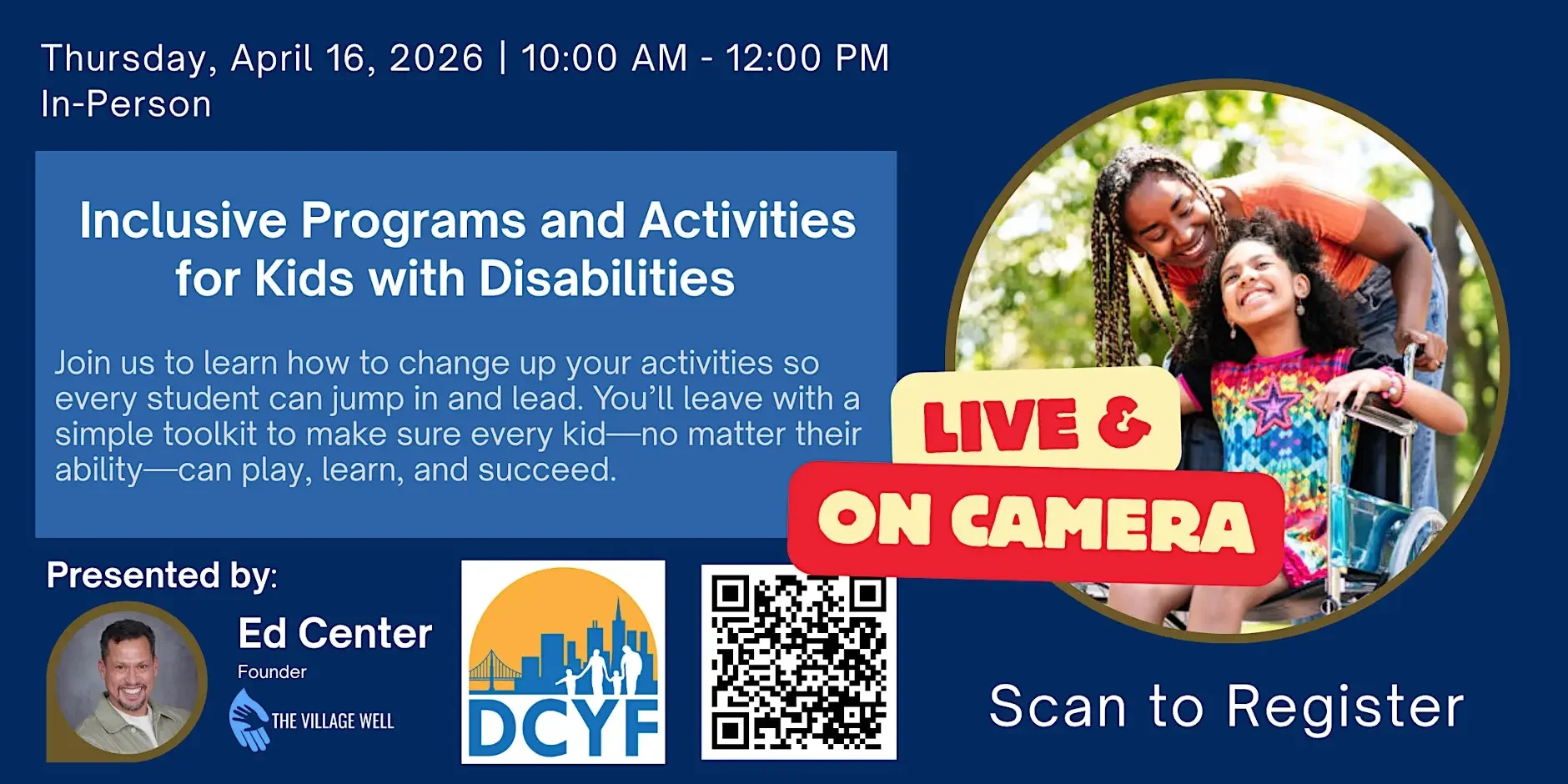
Want to be the face of leadership for youth programming in SF?
We’re partnering with DCYF to film a new city-wide video series, "Inclusive Programs in Action," and we’re looking for a "cast" of amazing practitioners to join us on camera!
This isn't a boring lecture—it’s a high-energy, hands-on workshop where you’ll practice real-world inclusion strategies and showcase your expertise.
The Details:
When: Thursday, April 16 | 10:00 AM – 12:00 PM
Where: Community Music Center, 544 Capp Street, SF
The Vibe: Interactive, inclusive, and fun.
Note: Since we’re filming a professional resource for the city, you’ll need to be comfortable being on camera.
Ready for your close-up? Come represent your org and help us set the standard for inclusion in San Francisco!
TONIGHT!
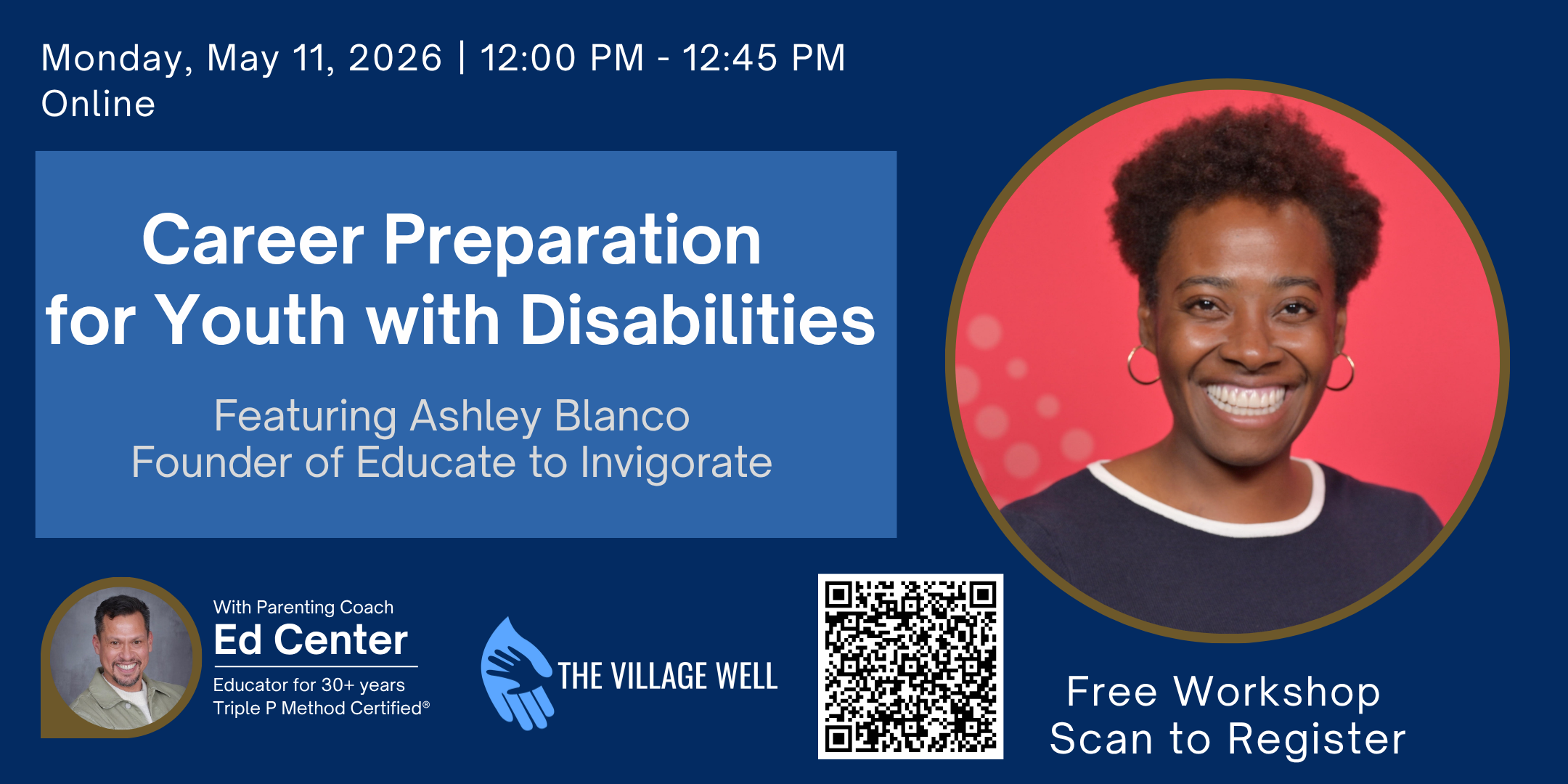
Career Preparation for Youth with Disabilities
Friday, May 11 | 12 PM to 12:45 PM
Free | Everyone
In this free workshop for parents and educators who work with youth with disabilities, I will interview Ashley Blanco on strategies for helping our kids determine their own path to a thriving adulthood.
Ashley works with neurodiverse kids in many ways including career support and coaching. She starts this process with kids as young as nine!
Her approach integrates sensory awareness with movement and pattern recognition to optimize academic success and career preparation. In doing so, her students develop the attributes and transferable skills for better life outcomes.
stories of hope
This section usually comes at the end of my newsletter. However, April is Autism Acceptance Month, and I wanted to make sure you saw these two beautiful stories of triumph. I’m not crying, YOU’RE crying!
I Thought I Would Be Caged My Whole Life
A heartwarming article about intelligence, resilience, and family love. Doctors believed Woody Brown’s autism was too severe for him to learn to speak or process language. He just published his debut novel.
Watch this with kleenex! An oldie but goodie about the team manager who finally gets a chance to play.

Of course, I’m kidding. For most of us, staying calm in crisis moments is a journey of several lifetimes. Remember, transitioning from getting instantly triggered by my son’s outbursts to being able to pause for five seconds, took me SIX MONTHS of hard work. It was the most important work I’ve ever done. If you are on a similar journey - keep visiting the tips in Part 1 and 2. Dedicate yourself to the practice. Reach out to me for support. All hard things require time, dedication, grace, and a sense of humor!
Now that you are on the journey, let’s explore how we can support our kids to understand their own nervous systems. For our big-feeling and big-behaving kids, teaching nervous system regulation is the most powerful gift you can give them. With rare exceptions, our parents did not teach us this. If we were very lucky, we had one or two teachers who understood the nervous system and helped us build self-regulation skills. You may feel like you are venturing into uncharted territory, but do not fear! Here are three fundamental truths at the exact same time:
Teaching self-regulation is rare in western households and school systems.
You are doing innovative, cycle-breaking, work that transforms both individuals and humanity!
We have both contemporary science and ancient wisdom that support you in this endeavor.
I have good news: nervous system regulation is a set of skills that can be learned and practiced. All babies communicate through raw emotional expression, then learn the skills of self-soothing and more nuanced communication. Many kids with disabilities dysregulate with more speed, frequency, and intensity than their peers. Teaching them regulation skills may require more time and effort, but the work will be worthwhile for everyone involved!
Here are some great places to start in teaching your kids or students skills that will impact their entire life journey.
Transparent Modeling
You can’t teach regulation if you are always losing your sh!t. You don’t have to be perfect; you have to show that you are making an effort. Start with narrating the steps of what you are doing. “I need to take some space right now because I’m starting to lose my cool,” sends a message to your kiddo that their behaviors are out of line, and it also showcases the tool you are choosing (taking space) in your effort to stay calm. When you lose it, and we all do, have a repair conversation later. Say things like, “I’m sorry I yelled. I wish I had made a better choice. I should have recognized I was getting angry and chosen a tool to keep my cool.” Do NOT add a “but” phrase to your apology that turns it back on the child. For example, “I’m sorry, but you were really stressing me out!” You are responsible for your own emotions and actions. There is another time for a learning conversation about the child’s behavior. Keep your “but” out of it.
Feelings Identification
When kids can communicate their needs and feelings verbally, they are less likely to communicate through big behaviors. Build their feeling vocabulary. This feeling chart is a great starter. It will help them identify feelings with more description than just sad or tired.
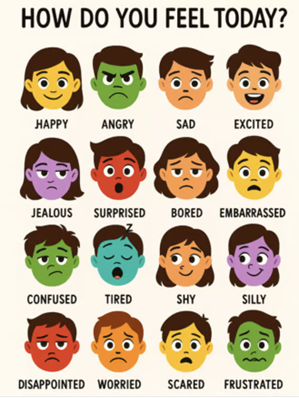
A month ago, I coached a family with an autistic daughter who is non-verbal, but expresses her emotions in big ways. I recommended putting up a feeling chart in the house and helping her identify her emotions by pointing to the chart. They made a game out of it. She’s now quick to use the chart to communicate her needs and they report a significant reduction in the frequency and intensity of frustrated outbursts.
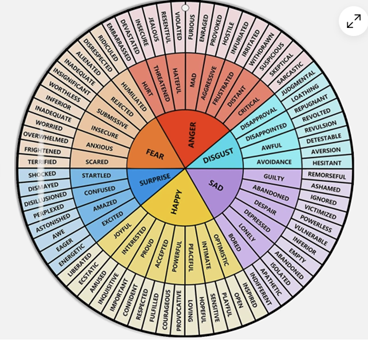
For older kids, consider a wheel like this one to identify even more granular emotions
Teach them about the nervous system.
They don’t necessarily need to know about that parasympathetic nervous system and the amygdala yet. But understanding how the lizard brain and thinking brain work can help kids comprehend what is happening with their emotions and actions. I know I’m always ranting against screens in general and Youtube in particular. But in this case, there are some helpful videos that I recommend.
This video is a good overview of how the emotional brain and thinking brain work together (and sometimes don’t).
This one teaches about the role of the vagus nerve, and offers some mindfulness tools for noticing emotions.
Practice Mindfulness
Unless you have a baby Buddha, your six year old ain’t gonna meditate for 30 minutes a day (if they do, please let me know how you achieved this!). But there are great tools for kids to practice mindfulness in simple and creative ways.
This video teaches emotional regulation through thought bubbles.
I love this video where you just breathe with the fish.
My favorite mindful activity for kids is the 5, 4, 3, 2, 1 game that guides us back to the present moment through our senses. I replace the last one with “one thing you love about yourself!”
Coping Skills
Mindfulness isn’t the only effective coping skill for nervous system regulation. This video teaches four categories of skills: relaxation, distraction, movement, and thinking. You’ll want to work with your kid to develop and practice specific skills after watching the video.
Have a Written Plan
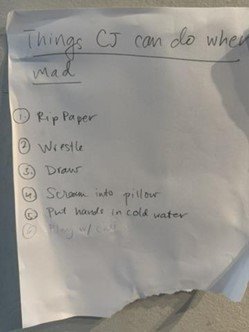
There’s a phrase "under pressure, you don't rise to the occasion, you sink to the level of your training" (often attributed to Navy SEALs or Archilochus). It’s great to keep a reminder of your training that you can refer to when things are falling apart. This is a photograph of our list of go to strategies when my son starts to dysregulate. We can run to the list and ask him what tool he wants to use.
I reached out to several colleagues and they gave me their own great suggestions!

Sahana Baker Malone, occupational therapist and co-owner of Development is Child’s Play, recommends the following:
Deep Pressure & Proprioception
Tight hugs or “squeeze” games
Wrapping up in a blanket (“burrito”)
Using weighted lap pads or stuffed animals
Wall pushes or chair push-ups
Oral & Breath-Based Regulation
Drinking through a resistive straw water bottle
Blowing bubbles or pinwheels
“Smell the soup, blow the soup” slow breathing
Chewy or crunchy snacks (if appropriate)
Movement & Body-Based Input
Slow walking or pacing
Carrying heavy objects (books, groceries)
Animal walks (bear crawl, crab walk)
Gentle swinging or rocking
Calm & Mindfulness-Based
Guided breathing or simple meditation
Listening to calming music
Body scan (“notice your feet… legs… belly…”)
Quiet time in a dim, low-stimulation space
In stressful moments, think: Deep pressure + slow breathing + simple movement
This combination is often the most regulating and accessible.
Ashley Blanco works in educational and career planning with neurodivergent kids. Catch my free workshop with her in May! She offers this:
I teach parents and teachers to bring awareness to the child’s facial expression while listening AND not to assume that what a child expresses in their face is actually what they are feeling. We must remain curious. The tips are to 1) ask your child, "Can I show you what I see?" 2) Mirror their facial expression. 3) Ask, "What do you see?" If the child is nonverbal, have the emotions chart nearby for pointing. That way, the parent/educator can gain clarity on what the child is actually expressing and they can move forward together. Here is a YouTube video I made on the topic a couple of years ago.

Dr Sarita Santos, former professor of Special Education, and now at Support for Families of Children with Disabilities recommends these tips from the book, What Happened to You by Dr. Bruce Perry and Oprah Winfrey. I also recommend this pivotal book!
Modeling works best when it occurs in secure relationships. Nurturing healthy relationships takes time. When co-regulating and modeling self-regulation, understand the following:
Repetition. “Rhythmic routines,” i.e., behavior patterns or habits, must be consistent across time. Model the same strategies the same way across situations. Whatever strategies you decide to incorporate (e.g., counting to 10, deep breathing, going to a safe space, thought bubbles, visualizing a peaceful place, Tucker Turtle Technique, etc.), be consistent, repeat, and create a rhythmic routine. Again, this will take time.
Relational. Individualize and personalize your interactions. Often, physical touch can “restart” or “re-set” a sensitized and triggered brain.
Rewarding. Positive reinforcers will encourage children to repeat and practice self-regulation strategies that are modeled to them. Validate children’s emotions without judgment and incorporate their interests in your reinforcement schedule.
Relevant. Interactions between adult and child must be child-focused, context dependent, and relevant to the child’s strengths, challenges, needs, and unique experiences.
Respectful. Expect different learning and communication styles and respect DIFFERENCE. This means changing your expectations, reflecting, and learning to understand life through the child’s perspective.
Thanks Sahana, Ashley, and Sarita for your wisdom! I hope these tools serve you, your family, and your classroom well.
Be Well!
ed
rant against screen time

We joined our friends at Fairplay and over 230 other orgs and experts in sending a letter to Google and Youtube to demand they stop spreading AI slop to kids.
Read the letter and join us in demanding “No AI slop for kids!” by signing Fairplay’s petition today and sharing it with anyone who cares about children’s well-being!
we’re obsessed with
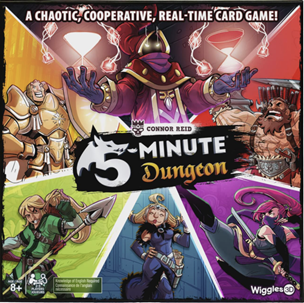
5 Minute Dungeon. I may have mentioned it before, but it’s worth a repeat. This cooperative game is intense, funny, and buzzer beater exciting. We played it with extended family on Easter and we were screaming with joy around the kitchen table. Note: for those with anxiety it might be a little much.
The Meaning of Your Life. I live in San Francisco and have a lot of friends toiling in the tech industry. They are rich. They go on fancy vacations, Instagram at fancy restaurants, and exercise at Equinox. They work 10 hour days and when I finally get a chance to connect with them, they admit to feeling burnout and are searching for something more. Harvard professor and joy expert Arthur Brooks has given us a fantastic new book. He gives clear counsel on what we all need to do to live with purpose and significance. I bought a stack to give out to my friends.

No time for a book right now? Start with his interview on the Oprah Podcast.
Honey Pearl Grapes are so delicious that I’m about to go back to Trader Joe’s for the third time this week. They are so next level sweet I think they should be moved to the candy aisle. Rinse ‘em, put them in a bowl in your kitchen table, and watch your family inhale all five recommended servings of fruits and veggies in one sitting.
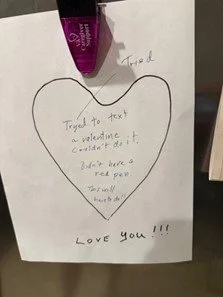
This Valentine’s Day card from my dad to my mom is the only thing sweeter than honey pearl grapes.
where we’ve been
Brand New Training Alert. Last week, we partnered with DCYF to host three workshops on neurodiversity and inclusive support. We provided educators with a practical "toolbox" for supporting ADHD and Autism in grades K-12, focusing on executive function and proactive skill-building. We concluded with "Supporting Spirited Kids," a heart-centered session on trading power struggles for partnership through dopamine-aware strategies and mindfulness.
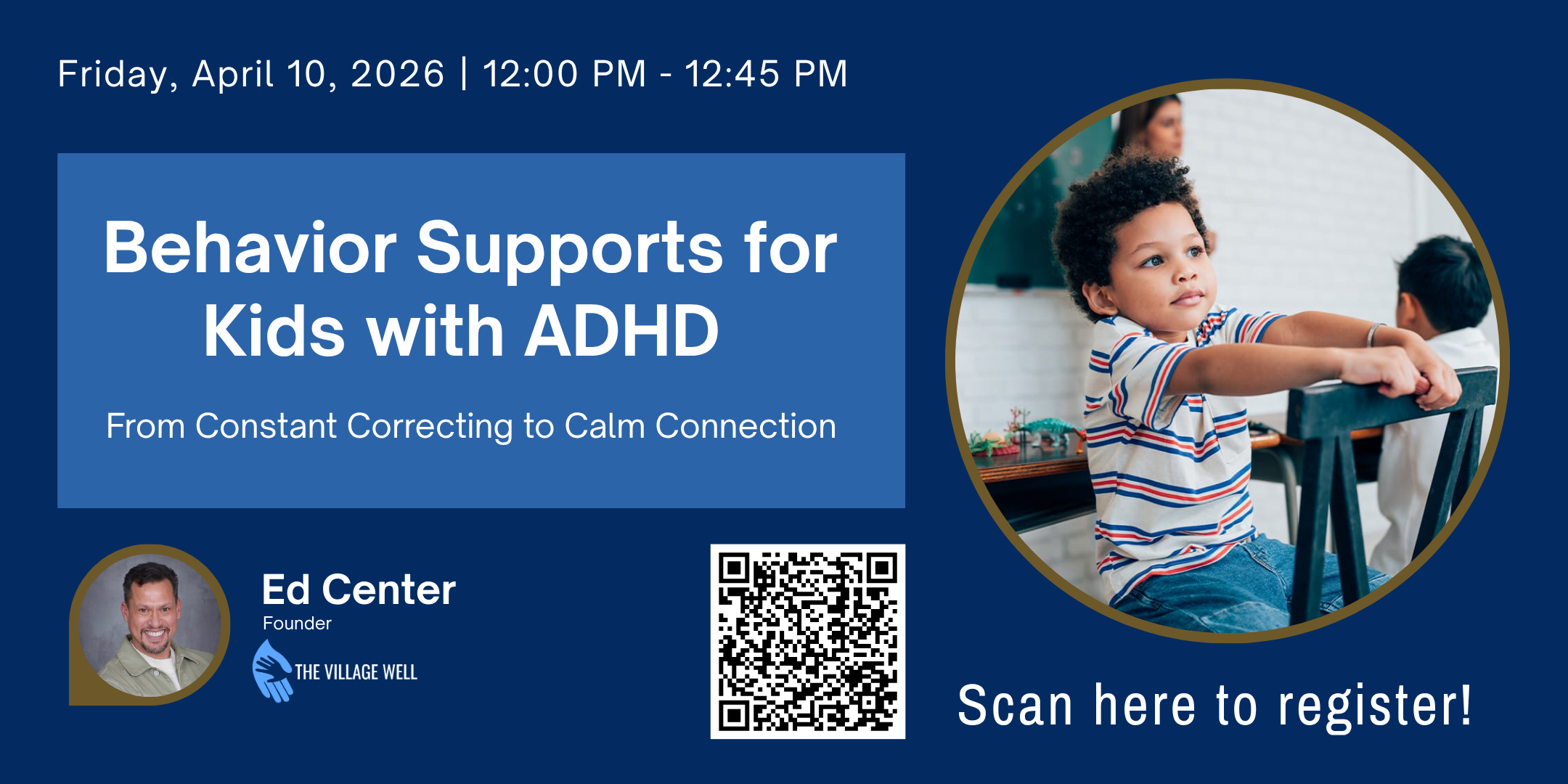
We hosted a high-energy workshop, "Behavior Supports for Kids with ADHD," for parents and educators. We explored the science of the ADHD brain, focusing on how to "ride the dopamine wave" and use the RAN method (Rewards, Accountability, Novelty) to boost engagement. From channeling hyperfocus to mastering sensory engagement, participants walked away with practical tools to trade power struggles for proactive support! Click here to attend our next free workshop.
Book a workshop for your school or organization
Bring The Village Well to your school or organization. We provide powerful, interactive and fun workshops for parents and/or staff. Learn more

Ed Center, the founder of The Village Well, is a parenting coach and educator certified in the Triple P method. The Village Well is a community of parents in BIPOC families, focused on attaining more joy, calm, and meaning in family life. We coach parents to prioritize their own healing and wellness, deepen connections with their kids, and learn tools to support better behavior. Services include Parenting workshops, Parenting courses, and community events. Our support is culturally-grounded support and honors your unique family. Ready to stop yelling? Schedule a free consultation with one of our team members.
FOLLOW THE VILLAGE WELL ON: